History is Lunch: The Fisher People looking into Vietnamese beginnings on Mississippi Gulf Coast

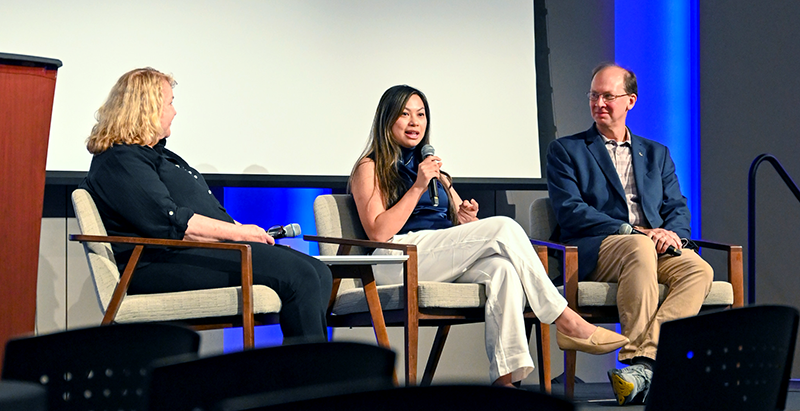
Panelists Emma To, certified registered nurse anesthetist and assistant professor at the University of Southern Mississippi; Deanne Stephens, co-director of the Center for the Study of the Gulf South and professor of history at the University of Southern Mississippi; and Garraway fielded audience questions at the conclusion of the screening.
Panelist Emma To answers questions from the audience at History is Lunch: The Fisher People.


A large audience of history buffs attended a special screening of the second episode of The Fisher People, a four-part documentary series by Mississippi State University Television Director David Garraway. The screening was part of the History Is Lunch series at the Two Mississippi Museums and it comes ahead of the documentary’s premiere next month on Mississippi Public Broadcasting.

Panelists Emma To, certified registered nurse anesthetist and assistant professor at the University of Southern Mississippi; Deanne Stephens, co-director of the Center for the Study of the Gulf South and professor of history at the University of Southern Mississippi; and Garraway fielded audience questions at the conclusion of the screening.

As the Vietnam War entered its final days in 1975, many South Vietnamese citizens looked for a path to a better life. For some, that path ended in Mississippi.

“The commercial seafood industry made the Mississippi Gulf Coast,” said Stephens, who appeared in the film. “In the beginning of the seafood industry, you did have locals who worked in the industry. But there were not enough locals, and the labor demands, once you began the processing plants, were so great that there had to be a different labor source.” 

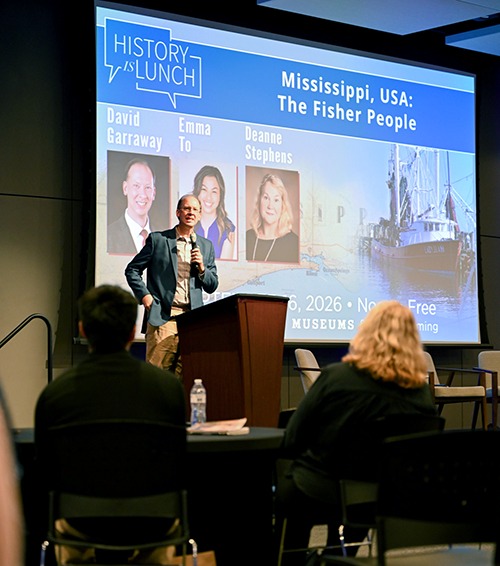
Mississippi State University Television Director David Garraway
Mississippi State University Television Director David Garraway welcomes the audience to the special screening of The Fisher People at Two Mississippi Museums.

The documentary explores the immigration experiences of Vietnamese refugees on the Mississippi Gulf Coast that have defined life along the shore for the past fifty years. 

The film’s second episode gave a glimpse of a rocky start for refugee fisherman and how change didn’t come quickly.

“My dad would bring his boat by (locals’ boats), and then they would have their shotguns out on their shoulders,” said To, who also appeared in the film. “And it's almost like they didn't say anything, but it was almost like, know your place. It was almost like a silent threat, if that makes sense.”

To also reflected on the resilience and gratitude shared by many first-generation Vietnamese families. 

“I feel like our parents kind of want to be unseen, not making a commotion. They just are grateful that they're in America, and they don't want to complain too much,” To said. “(Our parents) feel like this is already a blessing that we are here.”

Stephens noted that many Vietnamese refugees arrived in Mississippi seeking peace and stability. 

“I am not surprised that it is not talked about,” Stephens said. “They came here with all good intentions. They meant no harm. They wanted to just have a quiet life for their families.”

“And that was not what greeted them at the beginning.”

Produced by MSU TV, The Fisher People offers an in-depth look at the history, culture, and lasting impact of Vietnamese communities on the Mississippi Gulf Coast. The four-part documentary series premieres on Mississippi Public Broadcasting on Oct. 2 at 8:30 p.m., with new episodes airing weekly through Oct. 23

MDAH’s History Is Lunch series is presented Wednesdays at noon in the Craig H. Neilsen Auditorium of the Two Mississippi Museums in Jackson and is free to the public. These programs explore Mississippi history and culture through presentations by scholars, authors, and experts from across the state and nation.
 

Categories
Section

Mississippi Gulf Coast Community College President Mary S. Graham Elected to the MDAH Board of Trustees

Mississippi Gulf Coast Community College President Mary S. Graham, Ph.D., has been elected to the Mississippi Department of Archives and History Board of Trustees.

Graham of Perkinston replaces outgoing board member Nancy Carpenter of Columbus. The nomination must be confirmed by the Mississippi Senate.

Mississippi Gulf Coast Community College President Mary S. Graham, Ph.D., has been elected to the Mississippi Department of Archives and History Board of Trustees.

“Dr. Graham’s extensive leadership in higher education coupled with her deep understanding of Mississippi communities will be a huge benefit in our efforts to preserve historic places, expand access to our museums and support educational and preservation training efforts across the state,” said Spence Flatgard, president of the MDAH Board of Trustees.

Graham is the 12th president of the community college that has campuses and educational centers in south Mississippi and along the Gulf Coast. Graham, who began her career at the college in 1987, was named president in 2011. 

During her tenure, MGCCC has been ranked as one of the Top 10 community colleges in the United States by the Aspen Institute and was selected as a national Bellwether Award finalist, reflecting the college’s leadership in innovation, workforce development, and student-centered excellence.

"Serving as president of an institution with a 115-year history has given me a deep appreciation for the importance of preserving the stories, people, and places that shape who we are,” Graham said. “I am honored to join the Mississippi Department of Archives and History and look forward to supporting its work to preserve Mississippi’s rich history while ensuring it remains meaningful and accessible for generations to come."

Graham’s leadership roles include serving as chair of the board of directors of the American Association of Community Colleges and as chair of the Mississippi Association of Community and Junior Colleges Presidents Association. Graham also serves on the Mississippi Power Association Board of Directors, Women in Higher Education Mississippi Network Board, the Phi Theta Kappa Board of Directors and is currently the chair for the Mississippi Humanities Council Board of Directors.

The MDAH board voted on Graham’s nomination during its Aug. 18 meeting. 

In addition to Flatgard, the board members are Lucius M. Lampton of Magnolia, vice president; Cyrus Ben of Philadelphia; Reginald Buckley of Jackson; Carter Burns of Natchez; Betsey Hamilton of New Albany; Mark E. Keenum of Starkville; and TJ Taylor of Madison.

The Mississippi Department of Archives and History is the second-oldest state department of archives and history in the United States. The department collects, preserves, and provides access to the archival resources of the state, administers various museums and historic sites, and oversees statewide programs for historic preservation, state and local government records management, and publications.

For more information, call 601-576-6850 or email info@mdah.ms.gov.
 

Categories
Section

Dexter Allen to Perform at History Happy Hour

Dexter Allen in front of Jackson mural


A new performer will headline the upcoming History Happy Hour at the Two Mississippi Museums. 

The Mississippi Department of Archives and History previously announced that comedian Rita Brent would perform at the event. Now, she is unable to attend. Brent is traveling abroad and is experiencing flight complications.

In her place, Grammy Award winner Dexter Allen will take the stage. A Jackson-based artist, Allen ​blends the soulful roots of blues with ​electrifying showmanship, captivating ​audiences worldwide with his powerful ​guitar riffs and unforgettable ​performances.

This free event will also feature two specialized flash tours of the Mississippi Made exhibition, focusing on sports and music, at 5:15 p.m. and 6:45 p.m. Mississippi Made is a special exhibit, sponsored by Wayne-Sanderson Farms, currently on display at the museums. 

Two Mississippi Museums members, Blue Cross & Blue Shield of Mississippi employees, and Mississippi Museum Association Conference attendees will receive a complimentary drink. For more information, call 601-576-6850 or email info@mdah.ms.gov.

Section

MDAH Takes Preservation Training Across Mississippi

A Gulf Coast participant works with her group during a CLG workshop in Ocean Springs.


Preserving Mississippi’s historic places requires more than an appreciation for old buildings. It requires knowledge, planning and a clear understanding of the tools and processes available to protect the architectural heritage that helps define communities across the state.

The Mississippi Department of Archives and History helps communities build that knowledge through a statewide program of affordable historic preservation training for local officials, preservationists and community members.

Each year, MDAH offers four regional training sessions in communities across Mississippi, bringing preservation expertise directly to the people working to protect historic resources in their own hometowns. The sessions cover topics including architectural history, design review and Certified Local Government (CLG) procedures, providing participants with practical information they can apply in their communities. The 2026 sessions ended in August in Ocean Springs. The 2027 sessions begin in August 2027.

In addition to the regional sessions, MDAH offers an intensive two-day Preservation Boot Camp in Jackson. The program provides participants with a deeper look at the tools and techniques used to identify, evaluate and protect historic resources. The next boot camp is tentatively set for mid-April 2027.

Together, the regional workshops and Preservation Boot Camp give Mississippians opportunities to strengthen their preservation knowledge without the expense and travel often associated with specialized professional training.

For communities participating in the CLG Program, the training can be especially valuable. A stronger understanding of architectural history, design review and preservation procedures helps local officials make informed decisions about the historic buildings and districts that contribute to their communities’ identity and character.

James Bridgforth talks about CLG programs through MDAH.
MDAH CLG Coordinator James Bridgforth speaks about preservation to workshop attendees in Ocean Springs.

Andria Osborne, historical preservation inspections coordinator for the city of Laurel, has found the training particularly helpful in her work.

“These boot camps are helpful for community preservationists,” Osborne said. “I administer structural change request submissions in Laurel.”

“Preservation works best when knowledge is shared across the community,” said James Bridgforth, MDAH Certified Local Government coordinator. “Our conveniently located sessions are designed as both refreshers for seasoned historic preservation commissioners, as well as an introduction to preservation for local officials and commissioners taking their first steps into historic preservation.”

MDAH’s training opportunities are designed to serve a wide range of participants, from experienced preservation professionals and local government officials to community members who are beginning to explore the field of historic preservation.

By offering programs throughout the state and keeping costs minimal, MDAH is helping make preservation education accessible to communities of all sizes while creating opportunities for participants to connect with others working to preserve Mississippi’s heritage.

Understanding Historic Preservation Tax Incentives

MDAH’s preservation training also provides information about financial tools available to support the rehabilitation and reuse of historic properties.

Substantial federal and state tax incentives may be available for the rehabilitation of qualifying historic buildings in Mississippi. These programs encourage private-sector investment in historic properties, helping create jobs, support economic development and revitalize communities. Depending on the project, property owners may be eligible for both state and federal tax credits.

Barry McIlwain, president of the Pascagoula Historic Preservation Commission, said the annual workshops have given him a better understanding of the resources available to his community.

“One thing that I thought was particularly interesting that might be good for us as far as historic preservation is the tax credits,” McIlwain said. “And I understand that a whole lot better than I did before.”

“Historic tax credits demonstrate how preservation and economic development can work hand in hand,” said Clay Mapp, MDAH Mississippi Landmarks coordinator. “By encouraging investment in historic properties, these incentives help communities preserve their character while creating opportunities for new businesses, jobs and continued economic growth.”

Historic buildings and neighborhoods are tangible connections to the people, events and traditions that shaped Mississippi. Through its statewide training programs, MDAH is helping communities develop the knowledge and skills needed to care for those resources today and preserve them for future generations.

The CLG Program

The CLG Program is a federal-state-local partnership established through amendments to the National Historic Preservation Act of 1966. The program allows local governments that have established historic preservation programs meeting federal and state standards to participate directly in the national historic preservation program and related processes.

The CLG Program promotes historic preservation at the grassroots level and helps communities address local preservation needs through training, technical assistance and grant opportunities.

Since 2019, MDAH has awarded more than $250,000 to preservation projects in CLG communities across Mississippi.

MDAH allocates funds to individual CLGs through a competitive application process. Communities that remain in compliance with federal regulations may be eligible for annual matching grants to support preservation planning projects that are important to their communities.

Grant funding may support a variety of preservation activities, including the restoration of historic buildings; historical, architectural and archaeological surveys; preparation of nominations to the National Register of Historic Places; educational programs; and staff support for new historic preservation commissions.

For more information about MDAH’s Historic Preservation programs, visit https://www.mdah.ms.gov/historic-preservation.

Founded in 1902, the Mississippi Department of Archives and History collects, preserves and provides access to the archival resources of the state. The agency empowers people and places by telling Mississippi’s many stories. For more information, visit www.mdah.ms.gov or email MDAHInfo@mdah.ms.gov.

Section

MDAH Partners with Jackson Public Schools to Provide Educational Tours Through the GEAR UP Initiative

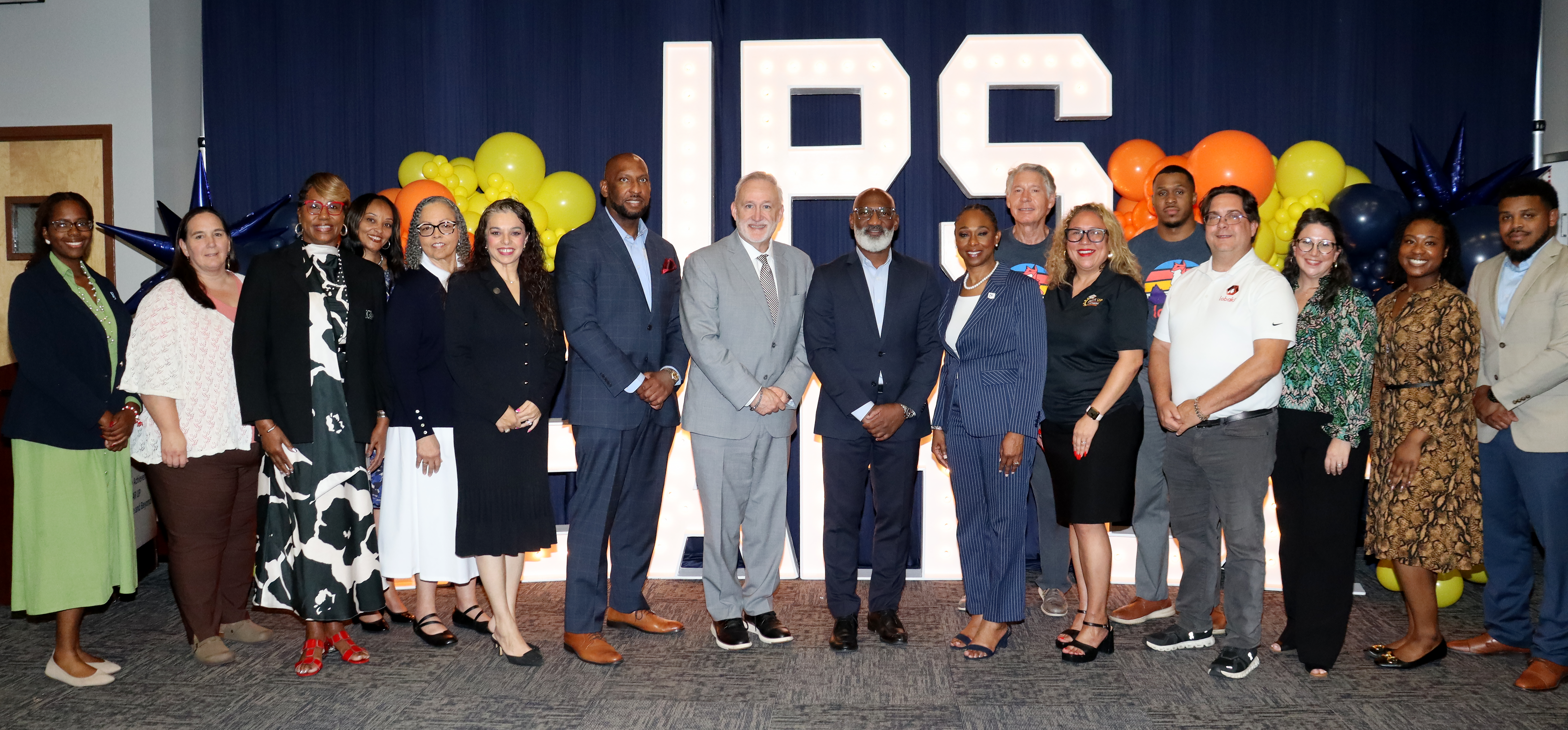
Gear Up Group Photo - JPS


The Mississippi Department of Archives and History, in partnership with Jackson Public Schools, will provide educational tours for JPS students at the Two Mississippi Museums, Eudora Welty House & Garden, and the archival collection housed at the William F. Winter Archives and History Building as part of the district’s new federally funded GEAR UP initiative.

Through the seven-year partnership, students will have opportunities to explore Mississippi history and culture while connecting classroom learning to their own lives, communities, and future educational and career goals.

“We are excited to partner with Jackson Public Schools through the GEAR UP grant and to connect students with the rich history and cultural resources available through the Mississippi Department of Archives and History,” said Kari Baker, MDAH director of programs and education. “This partnership gives MDAH an important opportunity to engage directly with Jackson students, introduce them to Mississippi’s many stories, and demonstrate how history connects to their own lives and futures.”

Jackson Public Schools has begun implementing a seven-year GEAR UP (Gaining Early Awareness and Readiness for Undergraduate Programs) initiative supported by a $10.6 million federal grant. The program is designed to help participating students explore careers, prepare for college, and develop plans for life after high school.

The initiative was formally announced during a press conference featuring JPS Superintendent Errick L. Greene and representatives from several GEAR UP partners, including MDAH, Jackson State University, and Hinds Community College.

“It’s very exciting to have all these partnerships supporting this initiative,” Greene said. “It is my hope that we can empower these students to go after their goals.”

The GEAR UP initiative will follow participating students from middle school through high school graduation and into their first year of postsecondary education. Students will receive sustained support through academic preparation, career exploration, college exposure, mentoring, and family engagement.

The federal GEAR UP program provides six- or seven-year grants to states and partnerships working to increase the number of low-income students prepared to enter and succeed in postsecondary education. The program emphasizes early intervention, academic preparation, and guidance on higher education opportunities and financing.

MDAH’s participation in the initiative will introduce Jackson students to the state’s history through educational experiences at the Two Mississippi Museums, which include the Museum of Mississippi History and the Mississippi Civil Rights Museum.

Categories
Section

History Is Lunch: Literary Enthusiasts Pay Homage to Ellen Gilchrist, ‘The Last Southern Writer’

History Is Lunch: Literary Enthusiasts Pay Homage to Ellen Gilchrist, ‘The Last Southern Writer’
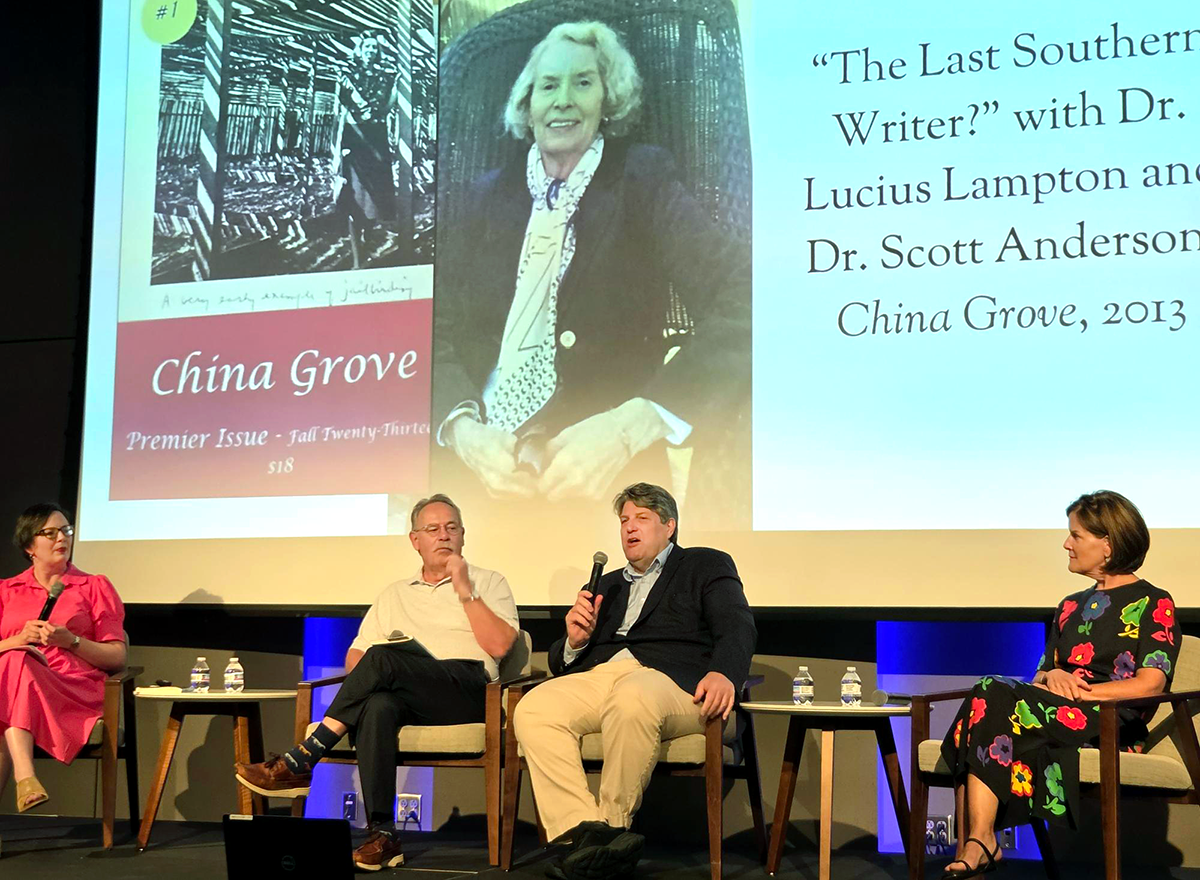
Dr. Lucius "Luke" Lampton speaks about the impact of Mississippi author Ellen Gilchrist had on Southern literature.


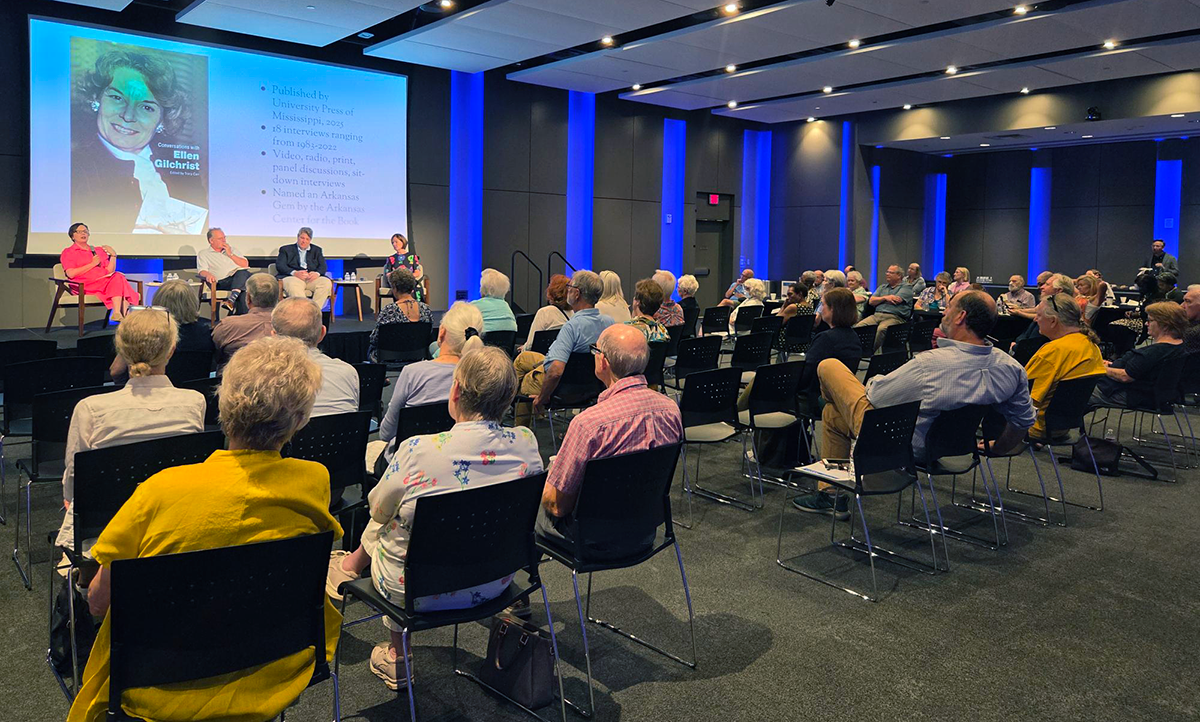
Author Tracy Carr recently moderated a lively panel discussion exploring the life, work and unmistakable voice of celebrated Mississippi author Ellen Gilchrist called “Holding Court with the Queen: Conversations with Ellen Gilchrist” during History is Lunch at the Two Mississippi Museums.

The discussion featured Carr, author of Conversations with Ellen Gilchrist, alongside China Grove Journal editors Dr. Scott Anderson and Dr. Lucius “Luke” Lampton, and Holly Lange, founder of the Mississippi Book Festival. During the discussion, Gilchrist was described as “the last Southern writer.”

Born in Vicksburg, Gilchrist drew heavily from her own experiences as she developed the characters and stories that would define her literary career. Her life was anything but conventional, and was an important part of her writing.

Gilchrist attended Vanderbilt University before transferring to the University of Alabama and later Auburn University. She eventually left college after eloping with Marshall Walker. The couple had two children before divorcing. Gilchrist later married a judge, divorced, remarried Walker and had another child before their second divorce.

Following that second divorce, Gilchrist returned to Jackson, where her parents lived, and enrolled at Millsaps College. There, she took a class taught by beloved Mississippi author Eudora Welty.

The timing was remarkable. Welty taught at Millsaps for only one semester, and it happened to be the same semester Gilchrist enrolled.

“That was kismet,” Carr said.

Gilchrist later married again and moved to New Orleans, continuing a life marked by relationships, travel, and experiences that would ultimately find their way into her fiction.

During the program, Carr shared a short clip from the television program “Post Script,” featuring Gilchrist speaking about her early attraction to reading and describing it as a “lonely thing.”

“For those who have never heard her talk before, that was a treat,” Carr said. “Not just the content, but the style. She's thinking about something, she switches to this, and she's telling a story, and it's all over the place. You can imagine how fun this was to transcribe.”

Lange recalled similar experiences during her conversations with Gilchrist through the Mississippi Book Festival’s author sessions.

“You'll see where she literally looks off to the left and kind of drifts off in thought unrelated to anything that we were talking about in the room,” Lange said.

That distinctive conversational style is captured in Carr’s book, which features 18 interviews spanning 40 years and examines Gilchrist’s life and work through the headstrong, honest and often outrageous Southern female characters for which she became known.

Carr said the interviews were drawn from a wide range of sources, including television and radio appearances, print interviews, conference proceedings and book festival recordings.

History Is Lunch: Literary Enthusiasts Pay Homage to Ellen Gilchrist, ‘The Last Southern Writer’

Anderson and Lampton also shared memories of their longtime relationship with Gilchrist, which began during and continued after the publication of her stories in the China Grove Journal.

“She was just a lovely person,” Anderson said, recalling the affection Gilchrist developed for him and Lampton.

One of the stories shared during the discussion highlighted Gilchrist’s connection to Welty. In one of her autobiographical essays, Gilchrist recalled meeting Welty outside the Carnegie Library while accompanied by her three red-headed children.

Gilchrist introduced the children to Welty, describing herself as tired and exasperated by the demands of motherhood. Welty responded with a question that would stay with Gilchrist: “You have three children. Why do you need to write?”

Lampton, who serves as vice president of the Board of Trustees of the Mississippi Department of Archives and History, said Gilchrist possessed a remarkable combination of brilliance and levity.

“She could do anything with a great force of intellect and also a great sense of humor,” Lampton said.

He also recalled Gilchrist’s response when panelists asked whether she agreed with comparisons made between her and other prominent Southern writers.

“She liked that comparison, but she said, ‘You know, I'm really a poet,’” Lampton said.

That observation, he said, offers an important key to understanding Gilchrist’s body of work.

“I think her entire writing career, if you look at what she's about, she said that what she figured out—to be successful as a poet—was she needed to hide the poems in her fiction,” Lampton said. “And so a lot of what she's doing in her fiction is hiding her poems.”

History Is Lunch is a weekly lecture series of the Mississippi Department of Archives and History that explores different aspects of the state's past. The hour-long programs are held in the Craig H. Neilsen Auditorium of the Museum of Mississippi History and Mississippi Civil Rights Museum building in Jackson.

For more information, call 601-576-6850 or email info@mdah.ms.gov.

Categories
Section

Nissan Supports Student Access to Mississippi History with $40,000 Grant to Two Mississippi Museums

Students on tour at the Two Mississippi Museums
The Nissan Neighbors grant will help offset costs during the 2026-27 school year for student field trips to the museums.


Nissan Neighbors has awarded a $40,000 grant to the Foundation for Mississippi History to support student field trips to the Two Mississippi Museums—the Museum of Mississippi History and the Mississippi Civil Rights Museum.

The grant will help offset costs during the 2026-2027 school year for visits to the museums related to admission, transportation, and on-site lunches, expanding access for thousands of students from Title I schools across the state. The Foundation for Mississippi History conducts fundraising efforts to help support and promote the projects and programs of Mississippi Department of Archives and History, which administers the Two Mississippi Museums.

Nissan Foundation Logo“We are grateful to Nissan for its continued investment in our educational programs and the students we serve,” said MDAH Director Barry White. “Their support makes it possible to create engaging, hands-on learning experiences that bring history to life and give students the opportunity to connect with Mississippi’s past in meaningful ways.”

The grant renews a longstanding partnership between Nissan and the Two Mississippi Museums. Nissan contributed $500,000 to support the museums' opening and, through ongoing support from the Nissan Foundation, has helped expand educational access and learning opportunities for visitors and students throughout the years.

The support from Nissan Neighbors, with facilitation from the Nissan Foundation, ensures more young Mississippians can engage with the state’s rich and complex history at no cost to students, families, or schools.

“Now in its 34th year, Nissan Foundation remains steadfastly committed to enriching communities in collaboration with nonprofit organizations in areas Nissan calls home,” said Ali Tonn, senior manager of Philanthropy at Nissan North America and executive director of the Nissan Foundation.

Since its founding in 1992, the Nissan Foundation has contributed nearly $18 million to nonprofit organizations across the country. Its mission is to foster sustainable communities in areas where Nissan operates.

For more than two decades, Nissan has assembled vehicles in Canton, Mississippi. The plant employs more than 4,000 people and produces the Nissan Altima and Frontier.

The Two Mississippi Museums are located at 222 North Street in Jackson and are open Tuesday through Saturday from 9 a.m. to 5 p.m., and Sunday from 11 a.m. to 5 p.m.

To learn more about field trip opportunities or to make a reservation, contact Crystal James, group tours coordinator, at cjames@mdah.ms.gov.

For more information, call 601-576-6850 or email info@mdah.ms.gov.
 

Categories
Section

Veteran Civil Rights Activist and U.S. Diplomat Andrew Young to Deliver 2026 Evers Lecture on Sept. 3

Andrew Young – a veteran civil rights activist who served as a Georgia congressman, U.S. Ambassador to the United Nations and a former mayor of Atlanta – will deliver the Medgar Wiley Evers Lecture on Thursday, Sept. 3, at 6 p.m. at the Two Mississippi Museums.

Young will reflect on his life in public service and his longstanding ties to Mississippi in a conversation with Ebony Lumumba, a Foundation for Mississippi History board member and the department chair and associate professor of English at Jackson State University. The event, which is free and open to the public, will also feature a special performance by singer and dramatist Ayanna Gregory, daughter of the late comic and civil rights icon Dick Gregory.

“We’re honored to welcome Ambassador Young back to Mississippi,” Two Mississippi Museums Director Michael Morris said. “We’re looking forward to hearing him reminisce on his time here with Evers and other figures of the movement.”

In 1961, Young was named director of the Citizenship School Program housed at the Southern Christian Leadership Conference in Atlanta, when Martin Luther King Jr. was president. He first met Medgar Evers through his work with the SCLC. 

His involvement in the Civil Rights Movement included being a key strategist in campaigns that led to the passage of the Civil Rights Act of 1964 and the Voting Rights Act of 1965.

In Mississippi, Young participated in James Meredith’s March Against Fear in 1966. That same year, he accompanied Black students as they entered previously segregated schools in Grenada, Mississippi, alongside Dr. Martin Luther King Jr. 

In 1968, Young helped launch the Poor People’s Campaign, a national movement focused on economic justice and the needs of Americans living in poverty.

Young was elected to Congress in 1972, the first African American from the Deep South since Reconstruction. In 1977, he was appointed U.S. Ambassador to the United Nations by President Jimmy Carter. He was elected Atlanta’s mayor in 1981 and re-elected in 1985.

“It is a rare opportunity to hear directly from a civil rights veteran who played such a significant role in ensuring all Americans have access to their constitutional rights,” Morris said.

Young has received honorary degrees from more than 100 universities and colleges in the U.S. and abroad and has received various awards, including an Emmy Lifetime Achievement award in 2011 and the Dan Sweat Award in 2017. His portrait also became part of the permanent collection of the Smithsonian National Portrait Gallery.

The Medgar Wiley Evers Lecture Series was established in 2003 to honor the legacy of Evers, a civil rights activist who was the NAACP’s first field secretary in Mississippi. His widow Myrlie Evers presented the Medgar and Myrlie Evers papers to the Mississippi Department of Archives and History in 2002. 

Previous Evers lecturers include Joy Reid, Eddie S. Glaude Jr., Lonnie Bunch, Henry Louis Gates, Robert P. Moses, and Manning Marable.

The event is sponsored by MDAH, W.K. Kellogg Foundation, and the Medgar and Myrlie Evers Institute.

In 2014, the Kellogg Foundation awarded $2.3 million to MDAH to support programming at the Two Mississippi Museums and fund a partnership between MDAH and the Medgar and Myrlie Evers Institute.

The Two Mississippi Museums—the interconnected Museum of Mississippi History and Mississippi Civil Rights Museum—opened December 9, 2017, in honor of the state’s bicentennial. The museums take visitors through the sweep of Mississippi history and the state’s role as ground zero in the nation’s Civil Rights Movement.

Categories
Section

More Than a Meal: Indigenous Cooking Brings Natchez History to Life

Rebekah Scott holds corn during cooking demonstration
Rebekah Scott prepares an ear of corn to be used in a Three Sister stew (corn, beans, squash) for guests at the Grand Village of Natchez Indians in Natchez.


The aroma of simmering squash, corn, and beans drifted through the Grand Village of the Natchez Indians as visitors gathered around to watch a centuries-old tradition come to life.

At the 128-acre National Historic Landmark administered by the Mississippi Department of Archives and History (MDAH), history is more than something preserved in exhibits—it's experienced through demonstrations of Indigenous cooking, crafts, and culture that connect modern audiences with the people who first called this land home.

Leading one such demonstration was Rebekah Scott, a descendant of Natchez, Cherokee, and Creek ancestry. Traveling from her home in Oklahoma, Scott regularly returns to Natchez to share the traditions, stories, and recipes passed down through generations.

During the recent two-hour program, Scott prepared Three Sisters Stew, a traditional dish built around three crops that Indigenous communities cultivated together for centuries: corn, beans, and squash. Known collectively as the "Three Sisters," the plants supported one another in the field, with corn providing a natural trellis for climbing beans, beans enriching the soil with nitrogen, and sprawling squash vines helping retain moisture and suppress weeds.

Rebekah Scott serves visitors
Rebekah Scott fills a bowl with Three Sisters Stew for guests attending a Indigenous Cooking Demonstration at the Grand Village of Natchez Indians in Natchez.


The same ingredients that worked together in the garden came together in the cooking pot.

"The stew is a comfort food that anyone can make, and it doesn't have to be specific to one culture or race," Scott said.

As the stew simmered, Scott shared stories of Natchez history, explaining that the area was once known as Nachi (pronounced "Nah-chee") Town, reflecting its Indigenous roots long before the modern city of Natchez was established. She emphasized that cooking has always been about more than nourishment—it has been a way to preserve family traditions, strengthen communities, and pass knowledge from one generation to the next.

Those lessons were on full display as Scott's daughters worked alongside her, helping prepare both the stew and traditional fry bread, demonstrating how these customs continue to be shared within families today.

Made from simple ingredients—flour, water, and lard—fry bread proved to be an instant favorite among visitors. Fresh from the skillet, it paired perfectly with the hearty stew and quickly became one of the day's most talked-about dishes.

"The Three Sisters Stew was hearty and flavorful," said Robbie Peters, a Brandon native visiting Natchez while home from Qatar. "It's hard to put the spoon down. But that fry bread was really good, too. Great event here in Natchez."

For Angelika Alford of Natchez, the program offered a deeper appreciation of the region's earliest history.

"It was a very, very nice representation and very informative," she said.

The Blauer family of Pullman, Washington, discovered the Grand Village while traveling through Mississippi between a Taekwondo tournament in Arkansas and an academic conference in New Orleans. Their unexpected stop became a memorable highlight of the trip.

"We drove around a little bit trying to explore the area, and it's like a little hidden piece of history that we didn't know about until just a few days ago," Melanie Blauer said. "We are happy we stopped in."

After sampling the fry bread, she was already imagining making it at home.

"This fry bread would taste really good with some potato soup or clam chowder," she said. "We'll have to give this a try soon."

Scott hopes that's exactly what visitors take away—not only recipes, but traditions worth sharing.

Visitors grab food from the demonstration at GVNI
Robbie Peters loads up on fry bread with his wife, Judy, while attending an Indigenous Cooking Demonstration at the Grand Village of Natchez Indians in Natchez.


"It's something to bring in grandmothers and families and aunts and kids to do," Scott said. "All of my daughters make fry bread."

For Scott, every demonstration is an opportunity to reconnect people with the Indigenous history that began in Natchez long before written records.

"I think that with this town being so keen on history and culture, this is where it started," she said. "The history and the culture from Native Americans—and just sharing and giving back something that I was taught—is the most important."

Visitors to the Grand Village can continue exploring that history year-round through the site's Visitor Center, museum exhibits, gift shop featuring Native American crafts, and walking trails that wind through one of Mississippi's most significant archaeological and cultural sites. Admission and parking are free, making the Grand Village an inviting destination for anyone interested in experiencing the rich heritage of the Natchez people.

The Grand Village is located at 400 Jefferson Davis Boulevard and is open to the public from 9 a.m. to 5 p.m. Monday through Saturday and Sundays 1:30 to 5 p.m.

Section

Inaugural MDAH Moses Fellow Conducts Research for Freedom Summer Database

Thomas presenting at a table at the Two Mississippi Museums


Have you ever wanted to know more about the people who volunteered to participate in Freedom Summer 1964?

Christina J. Thomas, a post doctorate fellow at the Center for Civil Rights History and Research at the University of South Carolina, is in the final stages of a project that will make that information more accessible.

Thomas is the first recipient of the Mississippi Department of Archives and History Robert “Bob” Moses Research Fellowship. The fellowship afforded Thomas the opportunity to use the MDAH archives this summer to conduct research for her project, “Digitizing Freedom Summer.” 

Her database will be a resource for researchers, students, and even surviving Freedom Summer volunteers who would like to connect with others they worked alongside in the summer of 1964.

“The goal of my digital project is twofold. First, I seek to geolocate each volunteer on a map providing viewers with a profile of each volunteer who came that summer, which comes from a database I'm compiling,” Thomas said. “Perhaps a short bio, but at the very least, links to other primary sources, where it has individuals share their stories, experience, memories, or old histories that already exist.” 

The Robert Moses Civil Rights Research Fellowship Program was created by MDAH to support young academic scholars and promote the study of the Civil Rights Movement. The program is named in honor of Moses because of his deep interest in developing Indigenous leadership and research, encouraging the study of the unsung heroes of the Civil Rights Movement.

Thomas received a doctoral degree in history from Johns Hopkins University and Master of Art in History from the University of North Carolina at Charlotte. She received her Bachelor of Art in History from Messiah University. 

In addition to her work at the Center for Civil Rights History, Thomas previously was an Andrew W. Mellon Visiting scholar at the Margaret Walker Center at Jackson State University. Thomas also was a historian for the History Department of the National Portrait Gallery at the Smithsonian Institution. 

This summer, Thomas mined MDAH collections, like the Freedom Song Collection, to uncover different kinds of stories and learn more about the volunteers of Freedom Summer. 

At the end of her presentation on July 23, Thomas showed a prototype of the future database.  The visual showed an interactive map that will showcase several different profiles and stories of Freedom Summer volunteers. She said she hopes to share the database with the public soon.

Learn more about MDAH fellowship opportunities here

Crowd watches presentation


Categories
Section