
15 Mississippi Sites Placed in the National Register of Historic Places in 2025
The 2025 Mississippi listings in the National Register of Historic Places include Provine Chapel at Mississippi College, the home of a lauded quiltmaker in Jefferson County and five historic districts across the state. In all, 15 properties were listed in the National Register this year.
The National Register of Historic Places is the nation’s official list of historic resources worthy of preservation. Mississippi has 1,534 listings in the National Register. Most of the listings in the National Register are buildings, but other historic resources which have been listed are historic districts, objects, sites, and structures.
The Mississippi National Register Review Board, administered by the Mississippi Department of Archives and History, reviews and makes comments on any changes needed to be made to the nominations. The approved nominations are forwarded to the National Park Service, which makes the final determination to list the resource.
These historic resources tell Mississippi’s stories. For example, the Hystercine Rankin House near Lorman was shared by the award-winning quiltmaker and her husband, Ezekiel. The John R. Lynch Street Civil Rights Historic District, comprised of a few buildings on the campus of Jackson State University, was a hub for civil rights activism in the 1960s. The J. W. Randolph School, a Rosenwald school in Pass Christian, survived Katrina, and has been restored to its 1927 appearance. Rosenwald Schools were funded by philanthropist Julius Rosenwald to advance education for African American children in the segregated South.
The following is the full list of the 2025 Mississippi sites and the chronological order in which they were listed in the National Register:
- John R. Lynch Street Civil Rights Historic District, Jackson, Hinds County, Jan. 16 – The district was a hub for the Civil Rights Movement during the 1950s and 1960s, with an inventory including the building which housed the state office of the Council of Federated Organizations (COFO), and the M. W. Stringer Grand Lodge, where Medgar Evers’s office was located and where Freedom Summer 1964 was organized and executed.
- Whitehead & Lloyd Motor Company, Jackson, Hinds County, Jan. 22 – The automobile dealership was constructed in 1945 and designed by Jackson-based architect Edgar Lucian Malvaney in the Art Moderne style meant to symbolize that the car industry and the country were entering a new modern era. The building is the only dealership from the “automobile row” of dealerships on State Street that retains its historic integrity.
- Holly Bluff on the Jordan Historic District, Bay St. Louis vicinity, Hancock County, Jan. 30 – The historic district is significant for its landscape designed gardens, meant for public recreation and touring. In addition, the district is significant for its excellent grouping of Rustic-styled buildings, containing a lodge and cottage. The picturesque placement of the gardens by the Jordan River made this a well-traveled public garden along the Mississippi Gulf Coast.
- Tupelo Downtown Historic District (Boundary Increase I) Tupelo, Lee County, Jan. 30 – This boundary increase expands the original district, listed in the National Register in 2014, to the railroad tracks. The area has commercial and industrial buildings that were built from the late 19th century to the mid-20th century.
- J. W. Randolph School, Pass Christian, Harrison County, Feb. 19 – The Colonial Revival building was constructed in 1927 as a Rosenwald school. Originally named the Harrison County Training School, the school was the only public high school for black students in Pass Christian in 1939. In that same year, it was renamed in honor of J. W. Randolph, a former Mississippi House of Representatives member, and a prominent African American schoolteacher in Pass Christian. The school survived Katrina’s destruction in 2005 and was restored to its 1927 appearance.
- Walker High School, Oakland vicinity, Yalobusha County, March 3 – Constructed in 1954, and designed by Edgar Lucian Malvaney, this Equalization school is where many African American children were taught until desegregation in 1970. The consolidation which followed caused the school to lose numbers until it closed permanently in 1999.
- Holmesville Historic District, Holmesville, Pike County, March 13 – Established in 1816, Holmesville served as the first county seat for Pike County, along with having a Shelbyville Square-designed street grid system, which was common in Mississippi during this time period. Holmesville would remain the county seat and a bustling area until 1873, when the county seat was moved to Magnolia by act of the state Legislature.
- Raymond House, Verona, Lee County, April 1 – Also known as the Verona Heritage House, this is a rare surviving example of a single dwelling cottage built in the antebellum Gothic Revival style in Verona. The house is the oldest surviving residence in Verona and is one of the oldest surviving buildings in the town.
Evans House and Barn, Laurel vicinity, Jones County, June 10 – The house and barn are the remaining elements of an early homestead, dating back to the second half of the 19th century. Though the house has undergone multiple remodels (including necessary repairs after Hurricane Camille in 1969), it still retains its core elements, such as the house’s I-house form and the barn’s original crib.
- J. W. Crawford and Co. General Store, Hickory Flat, Benton County, June 18 – Constructed in 1913, the store is a highly intact example of an early 20th century country store. Such stores were once common but have been slowly disappearing from the architectural landscape of Mississippi.
- Greater Biloxi Subdivision Historic District, Biloxi, Harrison County, Sept. 18 – Constructed between c. 1949 and c.1969, the subdivision was designed to serve as a place of residence for World War II veterans returning home. The district primarily contains single dwellings, but includes a former church, a few apartment complexes, and a commercial business building. The subdivision is one of the largest and most intact examples of a post-World War II residential subdivision in Biloxi.
- Mitchell & McLendon General Merchants, Enid, Tallahatchie County, Sept. 23 – Constructed c. 1910, the former store served as the commercial and social center of the Town of Enid during the early 20th century, and the building embodies the distinctive characteristics of commercial architecture of the early 20th century. Much like the J. W. Crawford store, this store represents a dwindling historic resource type in rural Mississippi.
- Hystercine Rankin House, Lorman vicinity, Jefferson County, Sept. 25 – The vernacular bungalow house was owned by renowned quilter Hystercine Rankin and her husband, Ezekiel.
- Easom High School, Corinth, Alcorn County, Oct. 30 – The original building on the school campus was constructed in 1954 and received additional buildings until c. 1966. Built around the same time as the Walker High School, Easom was an Equalization school, being the only public high school for African American students in several northeastern Mississippi counties. The school received black students from Iuka, Tishomingo County. All the buildings on campus were designed by Barton A. England, Jr., an Alabama-born architect who worked under E. L. Malvaney, and established an architecture firm in Corinth, Mississippi.
- Provine Chapel, Clinton, Hinds County, Nov. 21 – Constructed in 1860, the temple form Greek Revival-style Provine Chapel is on Mississippi College campus. Having been constructed during the early days of Mississippi College, Provine Chapel has been at the center of campus life. The chapel served the students as an educational facility and served the city of Clinton as a Baptist church until 1923, when First Baptist Church of Clinton was built across the street from the campus.
-XXX-
Photos
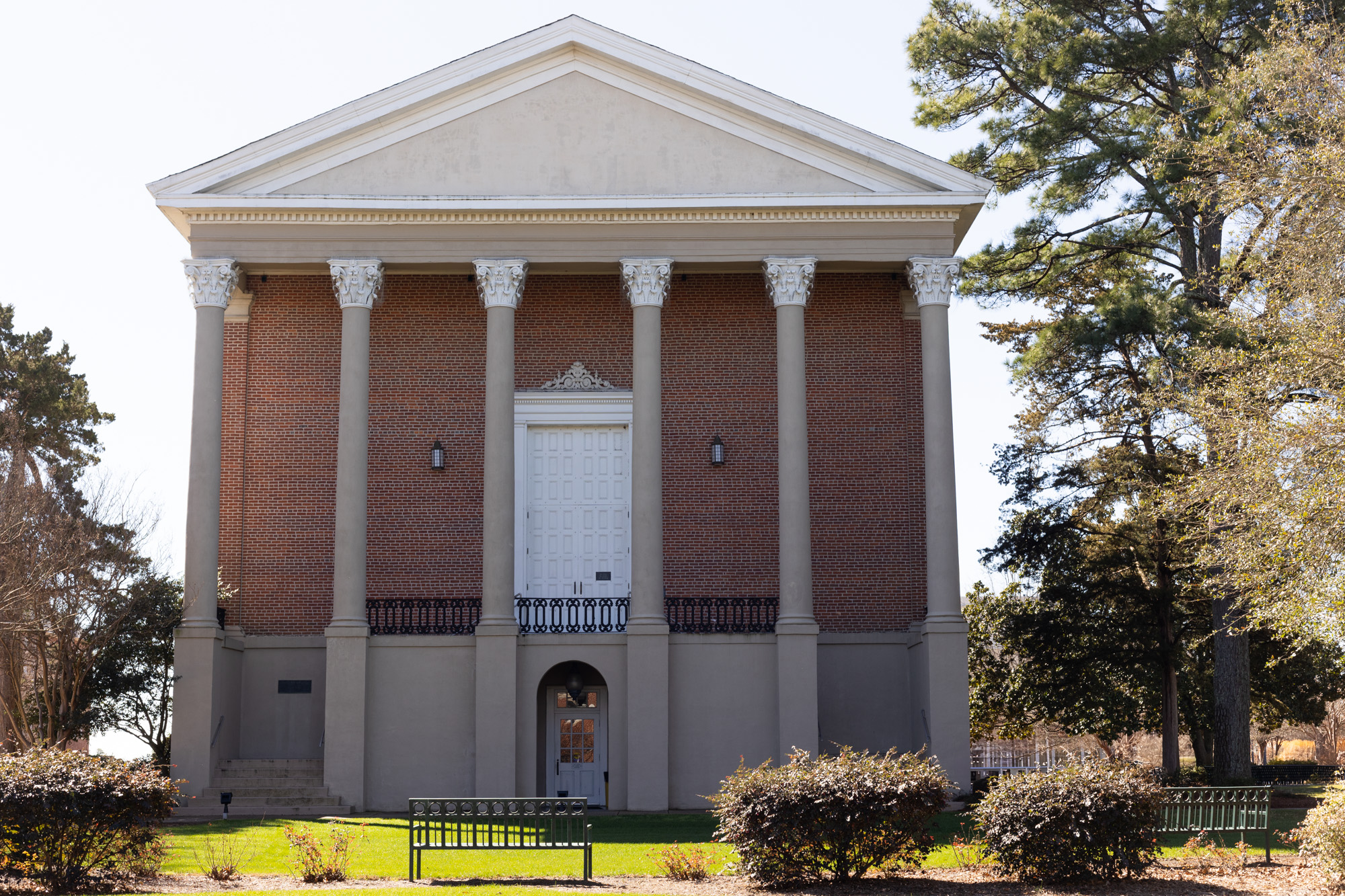
Provine Chapel, Clinton, Hinds County
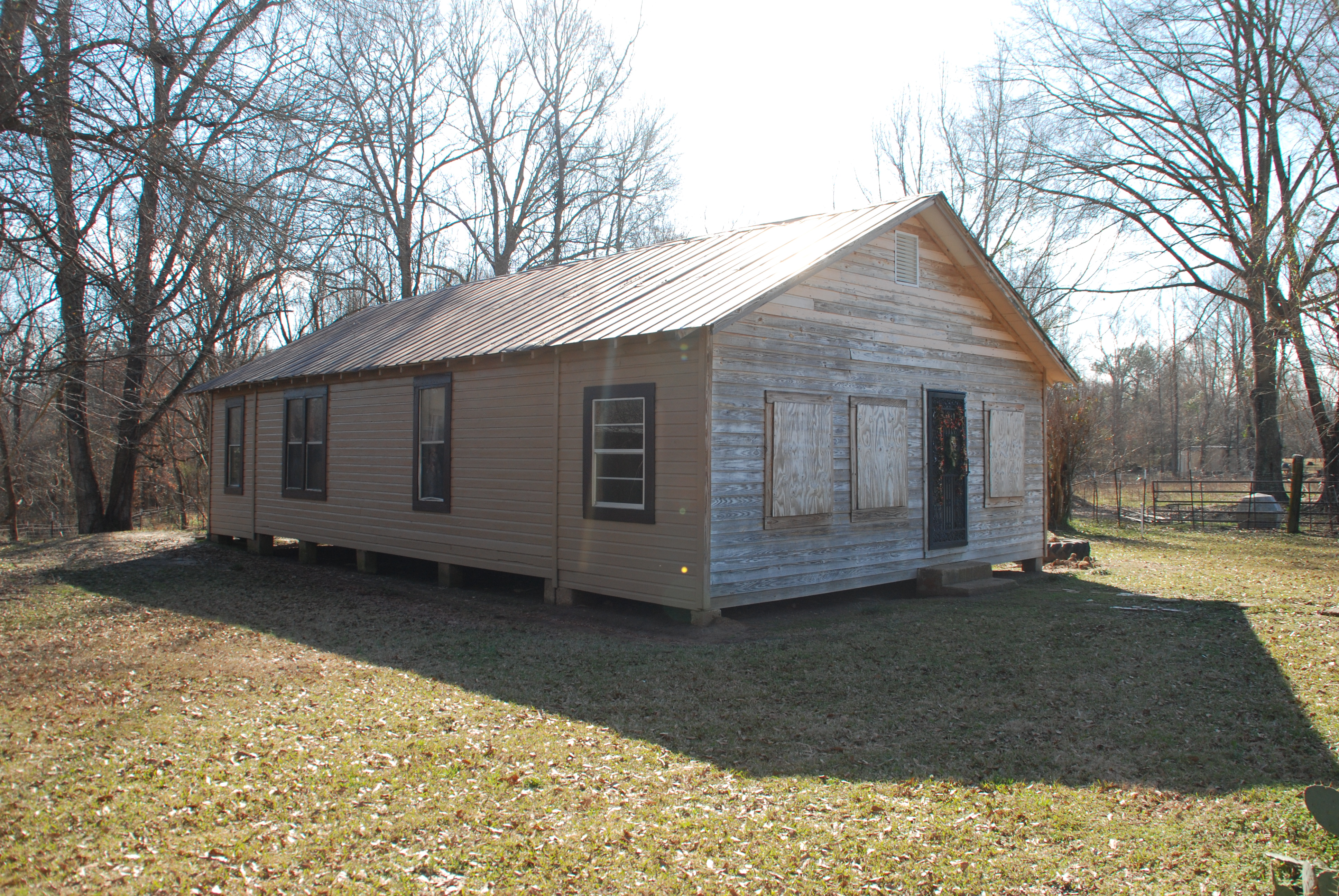
Hystercine Rankin House, Lorman vicinity, Jefferson County